
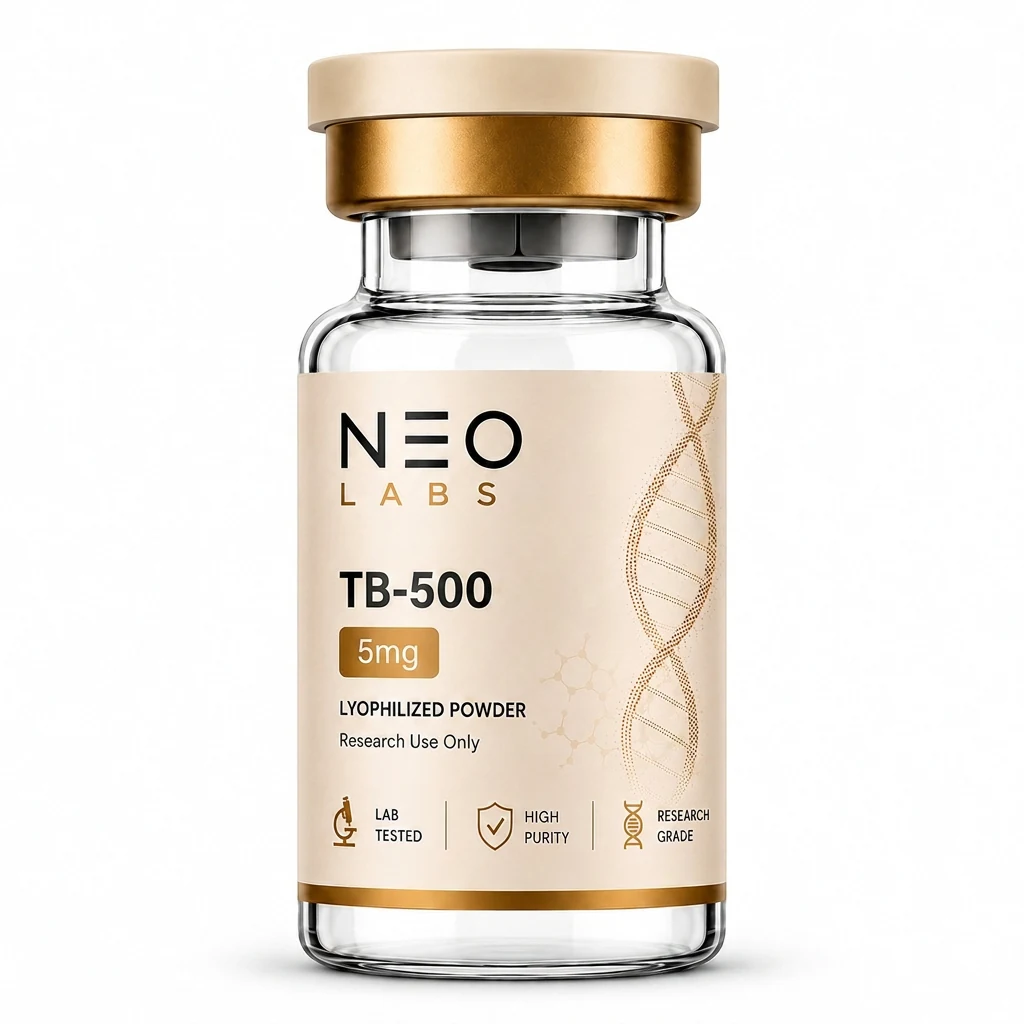
How is TB-500 classified?
It is described as a peptide fragment rather than a receptor agonist — its studied activity is protein-interaction based, centring on actin binding, not on a defined cell-surface receptor.
How is its mechanism studied?
- G-actin sequestration and cytoskeletal turnover in cell systems.
- Cell migration and endothelial models relevant to angiogenesis.
- Inflammatory-signalling readouts in animal repair models.
What kind of research exists?
The thymosin beta-4 parent protein has a substantial cell-biology literature; the TB-500 fragment itself is studied mainly in preclinical and veterinary research contexts. Human controlled data is limited, and reviews say so plainly.
What is it studied alongside?
Frequently paired with BPC-157 in preclinical repair-model literature and in combination reference materials.
How does Neo Labs supply and handle it?
Lyophilised, sealed vial, batch COA on request against the lot number. Cold, light-protected storage.