
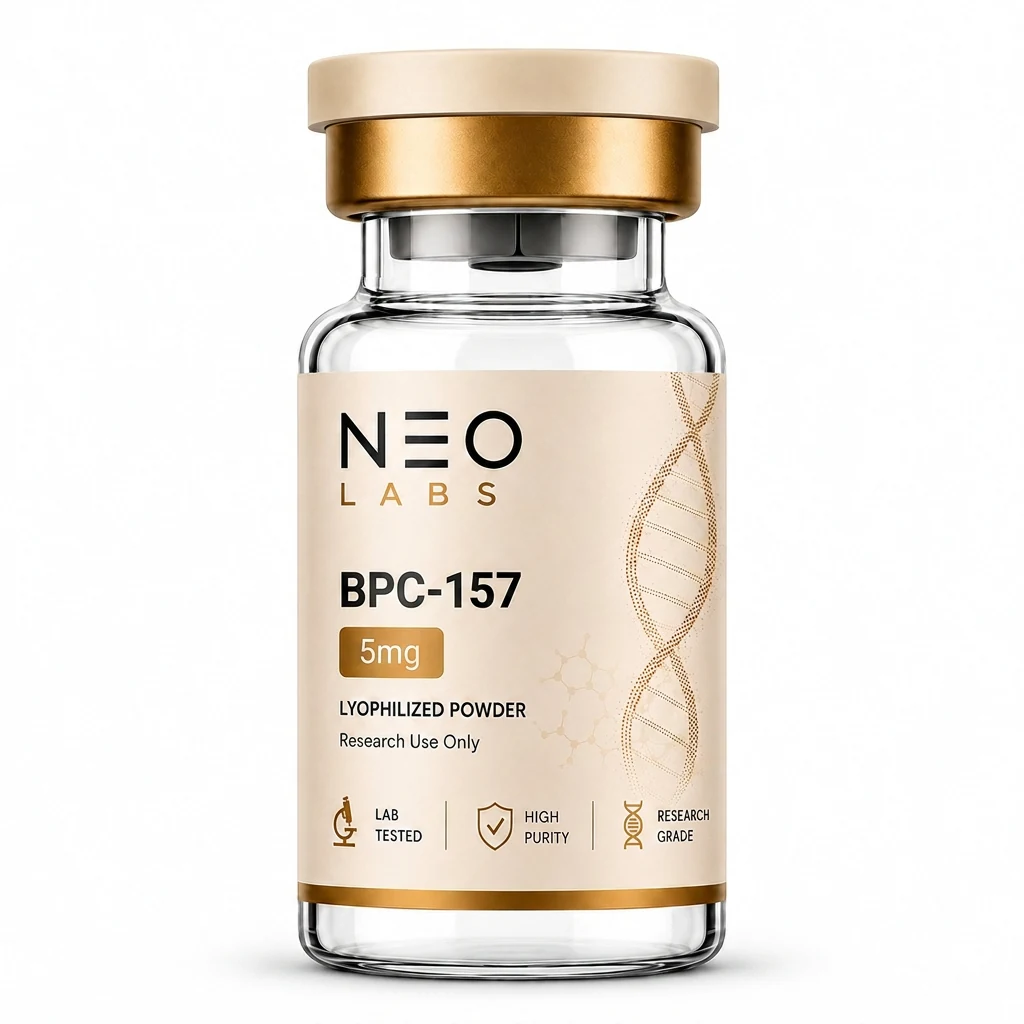
How is BPC-157 classified and structured?
Fifteen amino acids, no cyclisation, and reported stability in gastric conditions — the feature that first attracted research interest. Classification tables group it with cytoprotective peptides rather than with hormone analogues.
How is its mechanism studied?
- Growth-factor signalling associated with granulation and tissue remodelling.
- The nitric-oxide system, studied in vascular tone and cytoprotection models.
- Angiogenesis — new vessel formation — in wound and tendon study models.
These findings come predominantly from animal-model work and describe the published record, not effects in humans.
What kind of research exists?
The literature is heavily preclinical: rodent wound-healing, tendon and gastrointestinal models, plus review articles on gastric-pentadecapeptide cytoprotection. Recent systematic reviews explicitly flag the imbalance between the volume of animal work and the small number of controlled human studies — worth noting when interpreting any BPC-157 claim you encounter elsewhere.
What is it studied alongside?
Most often examined next to TB-500 (thymosin beta-4) in tissue-repair reviews, and in broader peptide reviews alongside growth-hormone secretagogues such as CJC-1295 and ipamorelin.
How does Neo Labs supply and handle it?
Lyophilised powder, third-party tested with a batch COA. Cold, dark storage for sealed vials; standard aseptic laboratory technique on reconstitution.