
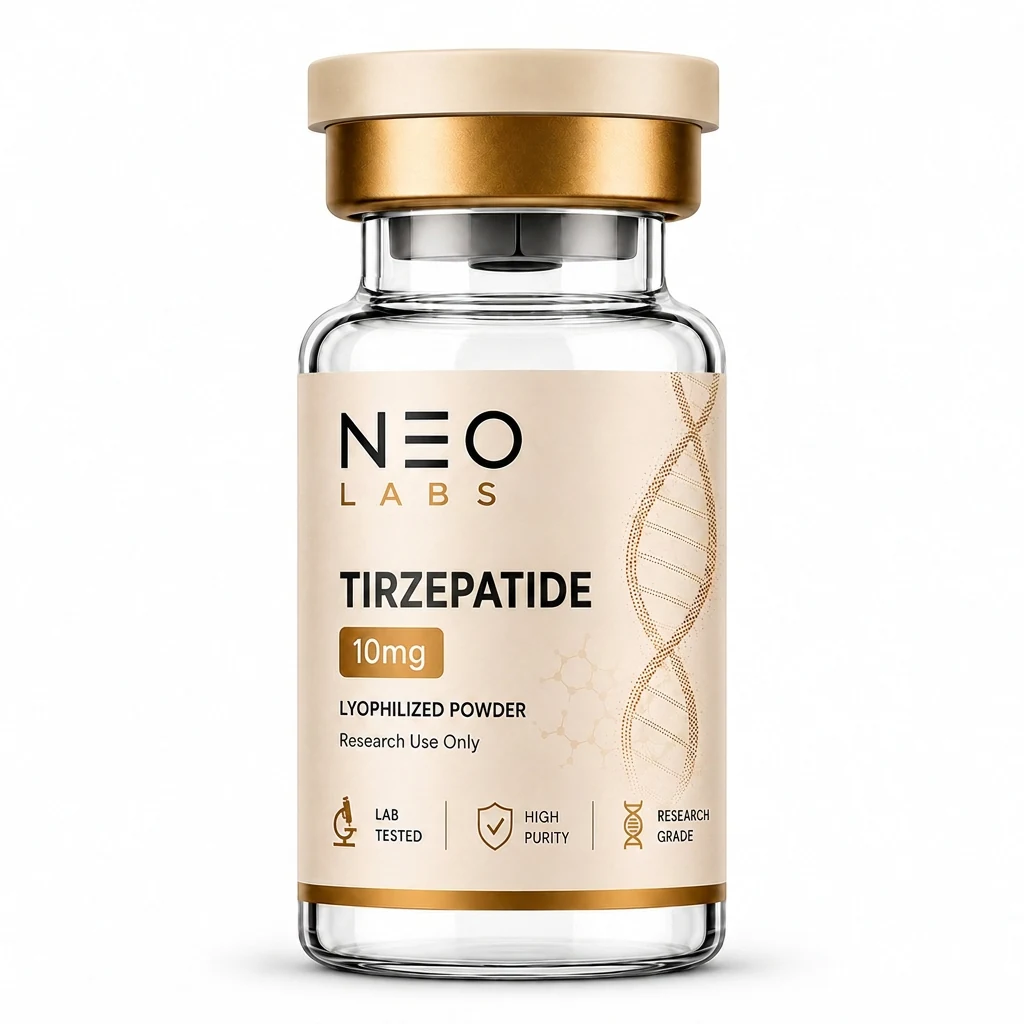
How is tirzepatide classified?
It sits in the incretin-mimetic class, described as a 'twincretin' or dual agonist. The acylation strategy — attaching a fatty-diacid to promote albumin binding — is the same half-life-extension approach used across long-acting peptide analogues.
How is its mechanism studied?
- Signal bias at the GLP-1 receptor, where published receptor assays report a preference for cAMP signalling over β-arrestin recruitment.
- GIP receptor engagement, studied in adipocyte and islet models.
- Downstream insulin secretion and gastric emptying in animal and human study designs.
Mechanistic descriptions summarise assay and model findings in the literature. Nothing here is medical advice or an administration recommendation.
What kind of research exists?
Tirzepatide has one of the larger evidence bases among modern incretin peptides, spanning receptor pharmacology papers, preclinical metabolic models and a multi-trial clinical programme. Independent review articles and meta-analyses now also cover it, which is unusual for compounds this recent.
What is it studied alongside?
Most commonly compared with semaglutide (single GLP-1 agonist) and retatrutide (triple agonist), and in amylin literature alongside cagrilintide as a combination research subject.
How does Neo Labs supply and handle it?
Lyophilised powder, sealed vial, third-party tested with a batch COA. Cold, dark storage for sealed vials; standard laboratory handling for reconstituted material.